
PRESENTATION SKILLS MASTERCLASS face-to-face
Register your interest in a public group session
We understand individuals and small businesses may not have the resources to book an exclusive group or one-to-one session, so we operate a wait list system. Give us you contact details and when enough people have registered their interest we'll be in touch to organise a date. For most sessions you'll be alongside (virtually that is) no more than five other trainees.
Organise an in-house private course
This is the way most organisations choose to work with us. You get to choose the workshop, nominate who you want to sit the session, fix a time and date that suits everyone and decide whether you want online or in-person delivery. We do the rest – even down to tweaking the training to match your specific needs. All we need is a bit of information about you so click the organise button to get the ball rolling.
| Price | From £1899 per session |
One-to-one training
Just you and the trainer’s undivided attention. Some people prefer to sit our courses on their own. Click the button to tell us a bit about yourself and suggest a date.
| Price | From £499 per session |
Coaching and mentoring
Maybe you don’t want or need a full training course but would like a little help. Or maybe you’d like a lot of help. Either way coaching and mentoring could be the answer. Tell us more and we’ll be in touch.
| Price | £199 for first hour, £149/hr thereafter |
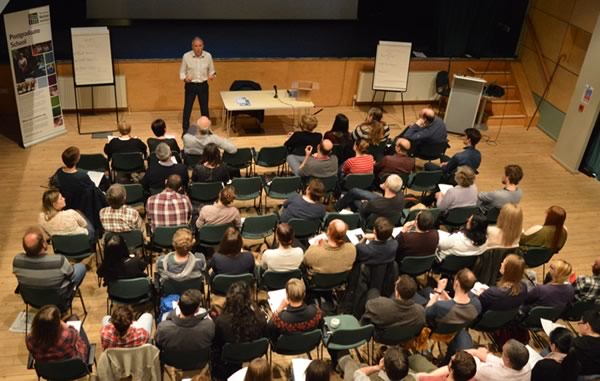
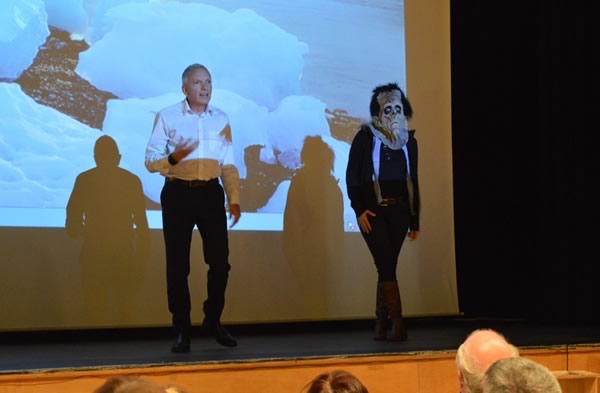
If you dread giving a presentation or quite enjoy the buzz but would like to communicate more effectively then this workshop is for you. It's suitable for participants from the profit and non-profit sectors as both are, in effect, “selling” something - whether to increase financial or social capital. You'll learn how to give engaging and purposeful presentations that get the audience doing exactly what you want.
CONTENT
We break the training day into easy-to-follow steps from concept (the crucial bit many people leave out), through design (where creativity is key but very often absent) to delivery (which is almost always scary, especially if you’re daring to be different).
Purpose
Why it’s worth investing time working out exactly what you (and/or others) want your presentation to achieve and whether the aim is attainable (or even desirable) through the spoken word.
Audience
Why the old saying, “know thine audience” is as true now as it’s ever been and practical techniques to research your audience.
Barriers to communication
Why it’s important to identify potential sources of “noise” between the transmitter (presenter) and receiver (audience).
The difference between physical and intellectual barriers to communication and tools to design them out, or help the audience overcome them where they are unavoidable.
Verbal and non-verbal communication
How doing one thing and saying another sends mixed messages and creates conflict. How to get the spoken and non-spoken word going in the same direction.
Content
What to put in, what to leave out and how best to communicate information without boring those who already know it without leaving behind the others who don’t.
Format
How to decide whether the content should be delivered through the spoken word (auditory), still or moving images (visually) or in an interactive, hands-on way (kinaesthetically).
Structure
How a planning matrix can help build a logical, well-ordered presentation that has an attention-grabbing opening and a memorable ending.
The tools of the trade
How to avoid Death by PowerPoint and why other, less well-known presenter tools such as story-telling, interactivity and topicality might be better choices.
Selling techniques
How best to deliver the call to action. Practical selling techniques such as repetition, conveyor belting and tagging.
Style
Formal versus informal. How to identify and deliver your presentation in the best possible style – one that makes the most of you and the venue in terms of the choreography of the event.
Nerves
Dealing with stage fright and why it may be good for you.
Feedback
How best to elicit feedback from an audience and to deal with it when it’s less positive than you’d hoped or anticipated. How the Q and A – loved by audiences but hated by presenters – can be better integrated and more purposeful.
FACILITATOR
Our presentation skills workshops are led by Richard Uridge who as a BBC broadcaster was used to presenting to audiences of more than a million. Over the years he’s helped thousands of individuals and hundreds of organisations communicate more effectively. He firmly believes anybody can be a good public speaker and his infectious enthusiasm for the business of communicating will rub off on you.
RESOURCES
We have a growing archive of resources designed to help you with your presentations. Much of it is available free of charge whether you book on our workshops or not. You can read the written articles here or browse our Five Minute Masterclasses many of which cover the topic of presentation and public speaking.
FEEDBACK
To find out what other people think about this workshop click here to read their comments..
IN HOUSE
This workshop is available for in-house delivery which is cost effective if you've got more than a few people who need training with the added advantage that course content can be tailored to your specific organisational needs. Contact the trainer to discuss your requirements.
YOU MAY ALSO BE INTERESTED IN


"An excellent training session, very well run and very engaging. I would go as far as to say probably the best training session I have ever been on."
Free stuff
Pricelist
Special offers
ACM Training blog


© ACM Training