ADVANCED MEDIA TRAINING face-to-face
Organise an in-house private course
This is the way most organisations choose to work with us. You get to choose the workshop, nominate who you want to sit the session, fix a time and date that suits everyone and decide whether you want online or in-person delivery. We do the rest – even down to tweaking the training to match your specific needs. All we need is a bit of information about you so click the organise button to get the ball rolling.
| Price | From £1899 per session |
One-to-one training
Just you and the trainer’s undivided attention. Some people prefer to sit our courses on their own. Click the button to tell us a bit about yourself and suggest a date.
| Price | From £499 per session |
Coaching and mentoring
Maybe you don’t want or need a full training course but would like a little help. Or maybe you’d like a lot of help. Either way coaching and mentoring could be the answer. Tell us more and we’ll be in touch.
| Price | £199 for first hour, £149/hr thereafter |
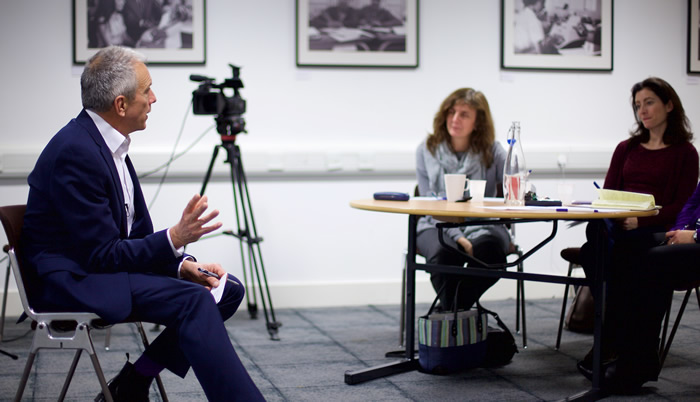
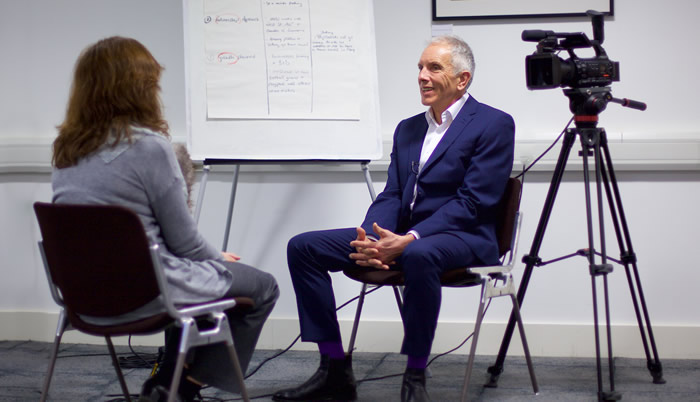
For press and PR people, heads of departments/services and senior managers who already have a good understanding of the interview process – in particular the importance of identifying key messages and “selling” those messages through techniques such as repetition. The workshop will build on existing skills and benefit anybody who may have to represent their organisation in times of emergency and/or crisis. Participants are likely to have been interviewed many times before on radio and by the print media but perhaps have less experience in front of camera.
CONTENT
The workshop is highly practical and will give participants a chance to develop the skills they already have and learn new ones that are relevant not only to emergencies but also to everyday working life. The workshop is centered on a fictional but highly plausible scenario which develops from an innocent-sounding initial report through to a full-scale incident. This scenario forms the basis for a series of challenging interviews ranging in style and duration. The interviews are likely to include:
- Door stepping (being approached by a camera operator and reporter without warning).
- One-to-one set piece “pre-recorded” (a formal, pre-arranged interview between interviewer and interviewee that is recorded for broadcast a short time later either in part or in full).
- Press conference (a pre-arranged situation where representatives of the organisation face a barrage of questions from an audience of journalists).
- One-plus-two “live” (a formal, pre-arranged interview between an interviewer and two interviewees conducted as if inserted into a live news programme).
- Remote one-plus-one “as live” (a formal, pre-arranged interview between an interviewer in a studio and an interviewee at a remote location conducted as if through a satellite or microwave link).
These interviews will bring out a number of important learning points including:
- The importance of using key messages.
- How to identify those key messages.
- How to sell key messages through techniques such as repetition, sound bites, use of language and other tricks such as telegraphing.
- Holding the line – how to avoid being led “off-message” by awkward interviewers.
- Getting back to the point – how to return to your key message when you are led astray.
- “Down-the-line” – how to deal with an interviewer you can’t see.
- Technological breakdown – how to reduce the risk of your best laid plans being foiled by dodgy equipment.
- Editing - why your carefully chosen words of wisdom are often butchered and how to avoid them being turned into mincemeat.
- Crisis! What crisis? Handling the media in times of trouble.
- Holding statements – what to say when there’s not much to go on.
- Breaking news – what to say when there’s too much to go on and the situation’s changing rapidly.
- Two’s company, three’s a crowd – the dangers of being interviewed with other interviewees.
SCENARIOS
Our scenarios are designed to be realistic, topical and testing. They a developed together with the client and based on the expectations of the delegates and their areas of responsibility. We pre-load the scenarios into our socialmediatestbed.com tool so that they unfold in real time.
FACILITATOR
Your facilitator will be the former BBC broadcaster, Richard Uridge. He's been leading our media and communication workshops for the past 28 years and has a professional range from Paxman to Pussycat perfectly suited to putting you and your team through their paces. He's recently been helping achieve realism in the nuclear power industry's emergency planning and crisis communications exercises.
IN HOUSE
This workshop is available for in-house delivery which is cost effective if you've got more than a few people who need training with the added advantage that course content can be tailored to your specific organisational needs. Contact the trainer to discuss your requirements.
YOU MAY ALSO BE INTERESTED IN


"An excellent training session, very well run and very engaging. I would go as far as to say probably the best training session I have ever been on."
Free stuff
Pricelist
Special offers
ACM Training blog


© ACM Training